
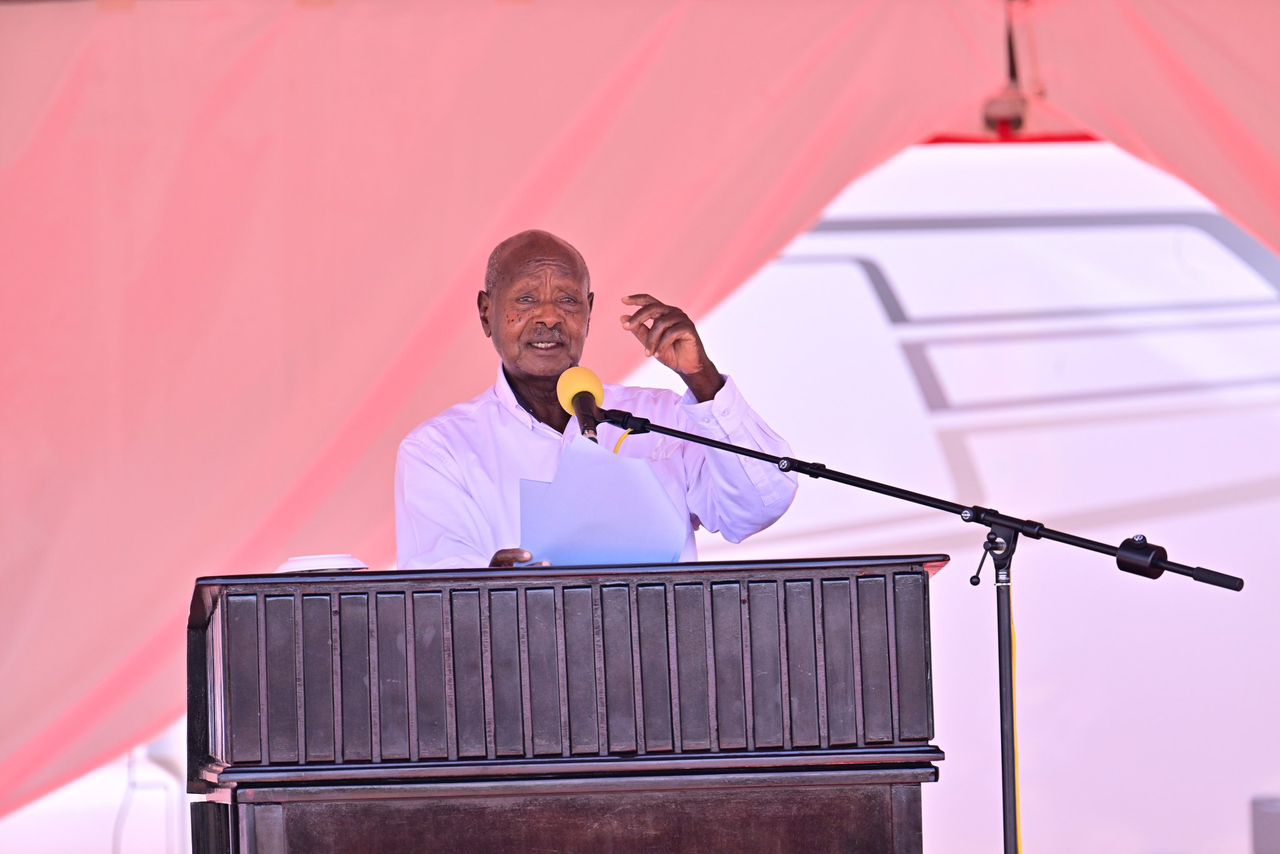
Uganda’s dairy sector has grown from 200 million litres of milk annually in 1986 to 5.4 billion litres today, President Museveni has said, describing it as one of the strongest examples of rural economic transformation under long-term government intervention.
Delivering the State of the Nation Address, Museveni said the expansion of milk production has shifted thousands of households in the cattle corridor from subsistence livelihoods into commercial agriculture.
“This work did not only help these families but saved Uganda an import bill of US$1.56 billion,” the President said, adding that dairy exports now generate about US$285 million annually.
He described dairy farming as a key pillar of import substitution and rural income growth, particularly in pastoral communities that have gradually transitioned into market-oriented production systems.
Museveni said early government efforts to encourage cattle keepers in the 1960s and beyond to adopt settled commercial farming were initially met with skepticism.
“Professionals told me I was wasting my time. They said these people could not change from a pre-capitalist lifestyle to a money economy,” he said.
The President told Parliament that the sector has since delivered significant income gains for farmers, with some now earning millions of shillings monthly from milk sales and investing in housing, education, and improved living standards.
He cited Nyabushozi and other cattle corridor areas as examples where dairy farming has become a dominant economic activity, supported by infrastructure such as milk coolers and collection networks.
Museveni said some farmers are now producing up to 900 litres of milk per day, earning an estimated Shs21 million per month despite low farm-gate prices.
He also noted that Uganda now has about 160 milk and milk-products processing factories, a major shift from earlier decades when the country heavily depended on imported butter, cheese, yoghurt, and powdered milk.
“Today we export many of those products,” he said.
Nyabushozi County alone, he added, supplies about 1.15 million litres of milk daily through more than 100 milk cooling facilities.
Museveni urged farmers to further modernise production through improved pasture development, indoor feeding systems, and better herd management, arguing that Uganda has the potential to compete with leading global dairy producers.
“With indoor feeding and better management, Uganda can overtake countries like the Netherlands, Australia and Argentina in dairy production,” he said.
He described the dairy sector as a clear example of how sustained policy direction and farmer mobilisation can drive large-scale rural economic transformation.
